

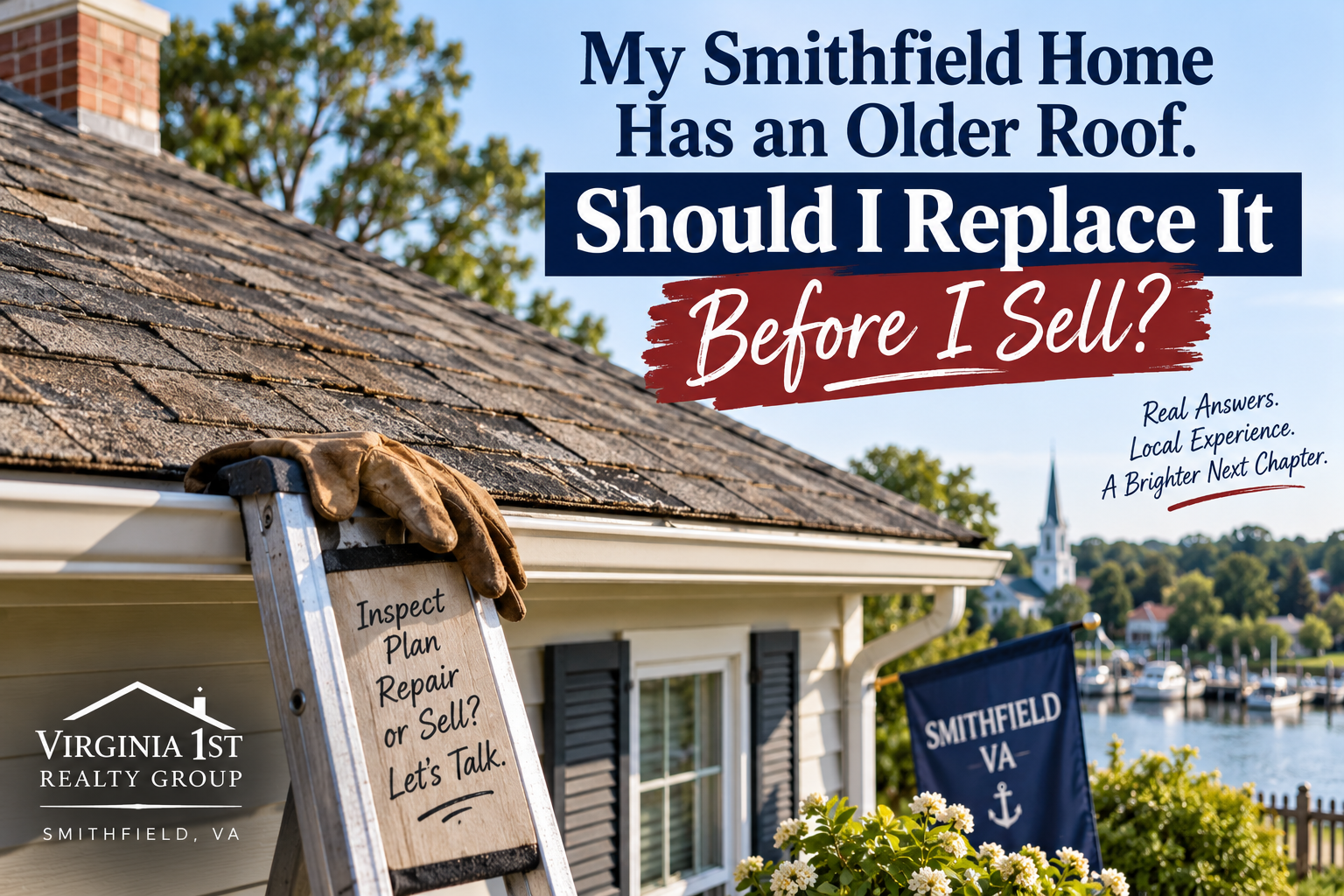
Short answer: Not automatically.
An older roof is not the same thing as a bad roof.
If it’s leaking, missing shingles, showing real damage, or creating an insurance or financing problem, then we may need to deal with it.
But if the roof is older and still doing its job, I wouldn’t spend $15,000 or $20,000 replacing it just because somebody told you buyers won’t buy a house with an older roof.
Before spending that kind of money, I want to know what problem we’re actually trying to solve.
How Old Is “Too Old” for a Roof?
That question comes up a lot.
And I don’t think age by itself gives us the answer.
Two roofs can both be 15 years old and be in very different condition.
One may have:
- Proper installation
- Good ventilation
- No leaks
- No storm damage
- Plenty of useful life left
The other may already have:
- Curling shingles
- Missing shingles
- Soft decking
- Leaks
- Previous patchwork
- Moisture getting inside
That’s why I don’t like making a $20,000 decision from a calendar.
Condition matters more than the birthday.
Will Buyers Care That the Roof Is Older?
Probably.
That doesn’t mean they won’t buy the house.
It means they may factor the roof into what they’re willing to pay.
Think about it from the buyer’s side.
They’re comparing your house with another one down the street.
Your home has a 17-year-old roof.
The other one got a new roof last year.
If everything else is equal, the newer roof has value.
That doesn’t automatically mean you need to replace yours.
It may simply mean the condition of your roof needs to be reflected in the overall price and negotiation.
Should I Get a Roof Inspection Before Listing?
Sometimes that can be a very smart move.
Especially if:
- You don’t really know the roof’s condition
- You’re unsure how old it is
- There have been previous repairs
- You’ve noticed a stain or leak
- You think buyers may question it
- Your roof is old enough that insurance could become part of the conversation
A written opinion from a qualified professional can give us something much better than guessing.
Maybe the inspector says:
“This roof needs replacing.”
Okay. Now we know.
But maybe they say:
“It’s older, but I’d expect another five to seven years of useful life.”
That’s very different.
And that information may help us make a better decision about whether to replace it, price around it, or leave it alone.
A Big Virginia Insurance Change Is Coming
This is especially interesting right now.
Beginning January 1, 2027, Virginia law will put new limits on an insurer’s ability to refuse, cancel, or decline to renew coverage based only on the age of an asphalt-shingle roof.
Under the new law, an insurer generally cannot make that decision solely because the roof is less than 15 years old. For older asphalt-shingle roofs, the homeowner or buyer must be allowed to have the roof inspected before replacement is required solely because of age. If an authorized inspector determines the roof has five years or more of useful life remaining, the insurer generally cannot require replacement based only on the roof’s age or condition. Virginia Law
That does not mean insurance companies have to ignore actual problems.
The law still allows insurers to consider things like unrepaired damage, deterioration, moisture intrusion, poor maintenance or structural concerns. Virginia Law
In plain English:
An old roof and a bad roof are not necessarily the same thing.
Virginia law is starting to recognize that distinction too.
Does That Mean I Should Just Wait Until 2027?
Not necessarily.
If your roof is actively leaking today, a law taking effect in January isn’t going to fix it.
And if you’re planning to sell this fall, we still have to deal with the house and the market we have right now.
But this change is another reason I wouldn’t automatically tell a seller:
“Your roof is 16 years old. Replace it.”
I’d rather know the actual condition.
What If the Roof Is Leaking?
That’s different.
If you know there’s an active leak, I want to deal with that before listing.
Maybe it’s a small repair.
Maybe flashing is the issue.
Maybe one area has storm damage.
Maybe the roof really is at the end of its life.
But an active leak can quickly become more than a roof issue.
Now we may be talking about:
- Wet insulation
- Drywall damage
- Wood damage
- Mold or moisture concerns
- Buyer inspection problems
And once a buyer starts wondering what water has been doing behind the walls, the conversation can get expensive pretty fast.
What If I Just Give the Buyer a Roof Credit?
That can work in some situations.
Let’s say the roof clearly has limited life left.
Instead of replacing it before listing, maybe we price the house accordingly.
Or maybe we negotiate a credit with the buyer.
But there are a few things I’d want to know first.
Can the buyer get insurance?
Will the lender have an issue?
Does the roof’s condition create an appraisal concern?
Will the buyer actually be comfortable taking it on?
A credit sounds simple, but it doesn’t solve every problem.
Sometimes the repair or replacement has to happen.
Other times, a credit works just fine.
That’s why I don’t like deciding this before we know what the actual issue is.
The same kind of decision comes up with other repairs when deciding whether to fix something before selling or leave it for the buyer.
What If a Buyer Uses VA Financing?
That’s another reason roof condition may matter.
A VA appraisal looks at more than value. The property also has to meet VA minimum property requirements related to basic safety, soundness and sanitation.
That doesn’t mean a VA buyer needs a brand-new roof.
But an obvious property-condition issue can become part of the transaction.
We already talked more about that in our article about selling to a buyer using VA financing.
Again:
Old doesn’t automatically mean defective.
That distinction matters.
Is a New Roof Worth More Than It Costs?
Not always.
This is where sellers can spend money expecting a dollar-for-dollar return and be disappointed.
Suppose a new roof costs you $18,000.
Does that automatically make the house worth $18,000 more?
No.
Sometimes replacing the roof helps the house sell faster.
Sometimes it keeps a buyer from walking away.
Sometimes it removes an insurance issue.
Sometimes it gives buyers more confidence.
Those things have value.
But I’d want a reason before spending the money.
What If I Don’t Know When the Roof Was Replaced?
Start looking for records.
You may have:
- Old invoices
- Contractor paperwork
- Building permits
- Insurance records
- Warranty documents
Beginning in 2027, Virginia’s new insurance law specifically recognizes things such as receipts, contracts, permits and qualified inspection reports as ways to help establish a roof’s actual age or remaining useful life. Virginia Law
Even before then, having good records can make the conversation with buyers a whole lot easier.
“I think it’s about 15 years old”
isn’t nearly as helpful as:
“Here’s the invoice showing it was replaced in 2014.”
What I’d Tell a Smithfield Seller Sitting Across the Table From Me
If you tell me your roof is old, my first answer probably isn’t going to be:
“Replace it.”
I’m going to ask:
Does it leak?
Do you know how old it is?
Do you have records?
Has anybody looked at it recently?
Has your insurance company said anything?
Are there visible problems?
Then we decide what makes sense.
Maybe we replace it.
Maybe we repair something.
Maybe we price the home with the roof in mind.
And maybe we leave it alone.
I’d rather spend a few hundred dollars figuring out what we actually have than spend $20,000 fixing a problem we never proved existed.
Thinking About Selling a Home With an Older Roof?
If you’re thinking about selling in Smithfield, Isle of Wight, Carrollton, Suffolk or elsewhere in Hampton Roads and your roof is one of the things worrying you, ask me before you start calling roofing companies.
Call or text me at 757-880-7061 or email me at [email protected].
Tell me what you know about the roof and the house.
We’ll figure out what questions need answering before you start spending money.
Jason Goodin
Principal Broker
Virginia 1st Realty Group
Frequently Asked Questions
Should I replace an old roof before selling my house?
Not automatically. Condition matters more than age alone. I’d first look for leaks, damage, remaining useful life and whether the roof could create insurance, financing or buyer concerns.
Will buyers buy a house with an older roof?
Yes. Buyers purchase homes with older roofs all the time. The roof’s condition and how the home is priced compared with its competition are usually more important than age alone.
Should I get my roof inspected before listing?
It can make sense if the roof is older, you’re unsure of its condition, there have been previous leaks or repairs, or you think it may create an issue during the sale.
Can I give the buyer a credit instead of replacing the roof?
Sometimes. But a credit may not solve an insurance, lending or property-condition problem, so the buyer’s financing and the actual condition of the roof matter.
Is Virginia changing its insurance rules for older roofs?
Yes. Beginning January 1, 2027, Virginia law will limit when insurers can refuse or discontinue coverage solely because of the age of an asphalt-shingle roof and gives owners or buyers additional rights to establish roof age and useful life through inspection.
Check out this article next