

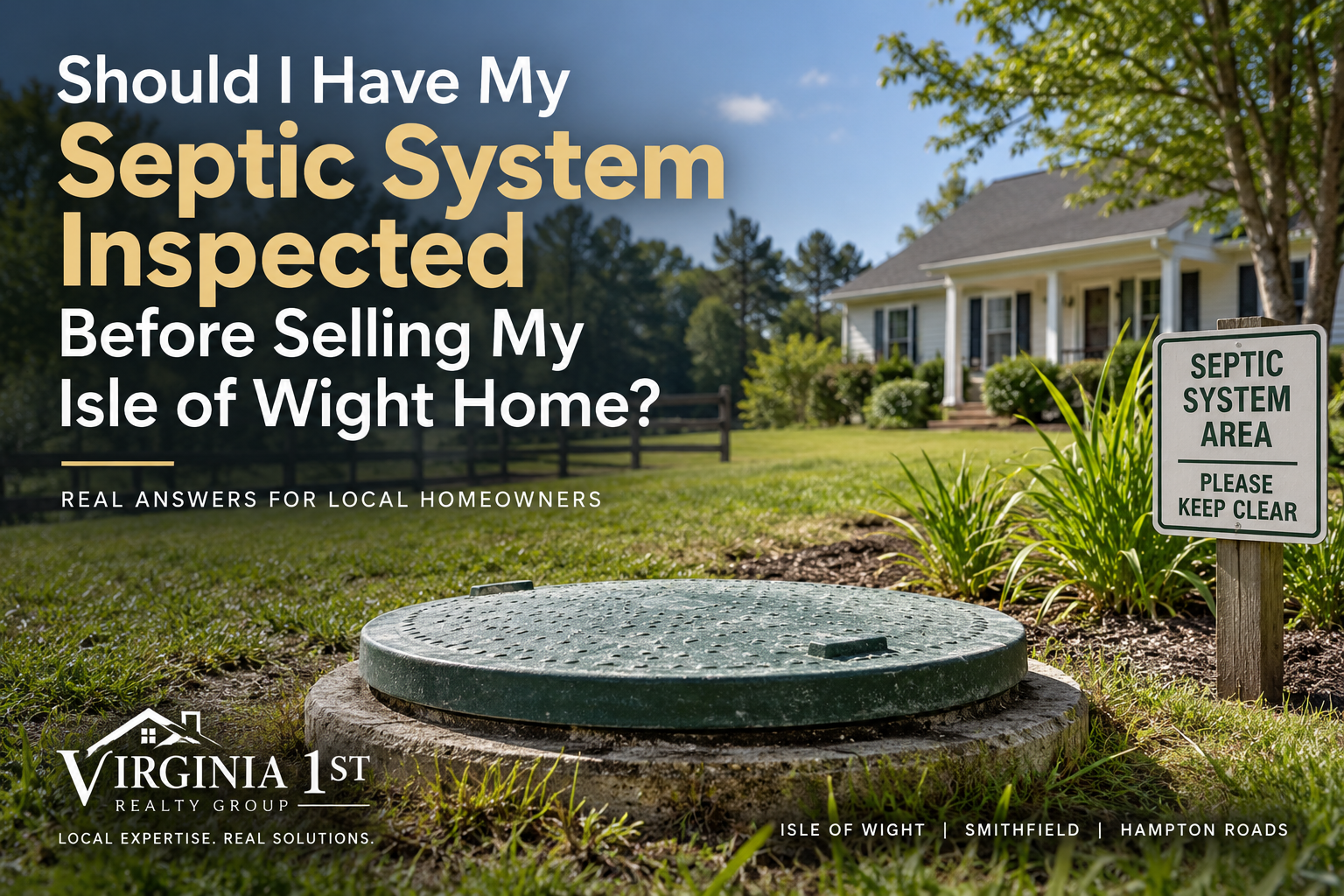
Short answer: Maybe — but I wouldn’t automatically order a septic inspection just because you’re thinking about selling.
If you know the system is older, you’ve had problems with it, or you haven’t thought about the septic system in years, I’d want to talk about it before putting the house on the market.
The reason is simple.
Septic problems can get expensive fast.
And finding out about one while you still have time to make decisions is a whole lot better than finding out when you’re three weeks from closing.
Does Virginia Require a Septic Inspection When I Sell My Home?
This is one of the first questions sellers ask me.
Virginia does not automatically require a septic inspection simply because a property is being sold.
The Virginia Department of Health says it does not require an onsite sewage system inspection before a property transfers. A lender may require one, though, and the contract between the buyer and seller can also come into play. VDH recommends having septic systems inspected by a licensed professional when they are being evaluated as part of a real estate transaction.
Virginia also has specific rules about who can perform a septic inspection connected with a real estate transaction. The inspector has to hold one of the qualifying onsite sewage-system licenses under Virginia law.
That doesn’t mean every seller needs to rush out and order one.
It means we need to know what we’re dealing with.
Why Does This Matter So Much in Isle of Wight?
If you’re selling a home with public sewer, this isn’t something you have to think much about.
But plenty of properties outside the more developed areas of Hampton Roads rely on private septic systems.
And most homeowners don’t spend much time thinking about their septic system when everything is working.
You flush the toilet.
The water goes away.
Life is good.
Until somebody starts asking questions about the tank, drain field, distribution box, system age, permits or maintenance history.
That often happens when you decide to sell.
What If My Septic System Is Old but Working Fine?
An older system is not automatically a bad system.
That’s important.
I wouldn’t tell a seller to replace a septic system simply because it has some age on it.
If it’s working properly, that matters.
But age does raise a few questions I’d want answered:
- Do you know when the system was installed?
- Has the tank been pumped?
- Have you had any backups?
- Have you noticed wet or unusually green areas around the drain field?
- Has anyone added bedrooms or changed the house since the system was installed?
- Do you have records for the system?
- Have repairs been made over the years?
You may know all of that.
You may know none of it.
Neither situation is unusual.
Should I Get It Inspected Before I List?
Here’s where I’d make the decision based on the house.
I’d be more likely to inspect early if:
The system is older.
You’ve had previous septic problems.
You already suspect something isn’t right.
Records are unclear.
The house has been vacant for a while.
Or you simply don’t want a septic surprise after accepting an offer.
I might wait if:
The system is relatively recent.
You have good records.
It has been properly maintained.
There are no signs of trouble.
And there isn’t another reason to believe an inspection before listing would help us.
There isn’t one answer for every property.
What Happens If the Inspection Finds a Problem?
First, don’t panic.
Finding a problem doesn’t automatically mean you need to install an entirely new septic system tomorrow.
Some issues may be maintenance.
Some may be repairable.
Others can be more serious.
The Virginia Department of Health notes that larger repairs can involve a licensed designer, permits and additional work before the system is put back into proper service. That process can take time, which is one reason septic problems discovered late in a transaction can become such a headache.
I’ve been involved in transactions where an older septic issue turned into a five-figure conversation very quickly.
That changes things.
Maybe the seller repairs it.
Maybe the buyer is willing to accept the problem as-is.
Maybe the price changes.
Maybe the deal structure changes.
The point is that we have choices when we know what we’re dealing with.
Should I Replace the Septic System Before Selling?
Not just because it’s old.
I’d want a reason.
Replacing a septic system can be a major expense, and I don’t believe sellers should spend thousands of dollars unless there’s a good reason to do it.
This is similar to the way I look at roofs, HVAC systems and other big-ticket items.
The same idea applies to deciding which repairs are worth making before you sell.
Old and broken are not the same thing.
If the system is functioning and there isn’t evidence of failure, I wouldn’t automatically assume replacement is the answer.
If there is a real problem, though, then we need to figure out our best path forward.
Can I Just Sell the House As-Is?
Possibly.
But remember what we talked about in our article on selling a home as-is.
“As-is” doesn’t make a problem disappear.
A buyer may still inspect the property.
Their lender may still have requirements.
And buyers may change what they’re willing to pay once they understand the condition.
You can absolutely sell homes that need work.
You just need the price, condition and buyer expectations to line up.
What About Septic Records?
This is something I’d check early.
The Virginia Department of Health says septic-system records may be available through the local health department. Those records can help identify the type and permitted capacity of the system and sometimes answer questions that would otherwise be guesswork.
That can be especially helpful with an older Isle of Wight property.
Before spending thousands of dollars, sometimes the first smart move is simply figuring out what system is actually there.
What I’d Tell an Isle of Wight Seller Sitting Across the Table From Me
Don’t go looking for expensive problems just because you’re thinking about selling.
But don’t hide from something you already suspect either.
If your septic system is older and you’ve never had an issue, great.
Let’s look at what you know.
Let’s see what records are available.
Then we can decide whether inspecting it before listing gives us useful information.
I’d much rather have that conversation before the house goes on the market than have everybody scrambling a few days before closing.
That’s especially true when we’re talking about something that could cost thousands of dollars.
Know what you have. Then make the decision.
That’s usually better than guessing.
That’s one of the same reasons some sellers consider a pre-listing home inspection.
Thinking About Selling a Home With Septic?
If you’re thinking about selling a home in Isle of Wight, Smithfield, Carrollton, Suffolk or elsewhere in Hampton Roads and you’re wondering how an older septic system could affect your sale, ask me.
Call or text me at 757-880-7061 or email me at [email protected].
Tell me what you know about the property, and we’ll talk through what I’d do before you start spending money.
Jason Goodin
Principal Broker
Virginia 1st Realty Group
Frequently Asked Questions
Is a septic inspection required to sell a house in Virginia?
Virginia does not generally require a septic inspection simply because a residential property is being sold. A lender or the terms of a real estate contract may create inspection requirements for a particular transaction.
Who can perform a septic inspection in Virginia?
For an inspection connected with a real estate transaction, Virginia law requires an authorized inspector who holds one of the qualifying onsite sewage-system licenses.
Should I replace an old septic system before selling?
Not automatically. Age alone doesn’t mean a system needs replacement. I’d first look at how the system is functioning, its history and whether there are signs of an actual problem.
Can I sell my house as-is if the septic system needs work?
Possibly. But selling as-is doesn’t prevent a buyer from evaluating the septic system or a lender from having requirements. The condition may also affect what a buyer is willing to pay.
Where can I find information about my septic system?
The Virginia Department of Health says onsite sewage-system records may be available through your local health department. Those records are often a good place to start
Check out this article next